
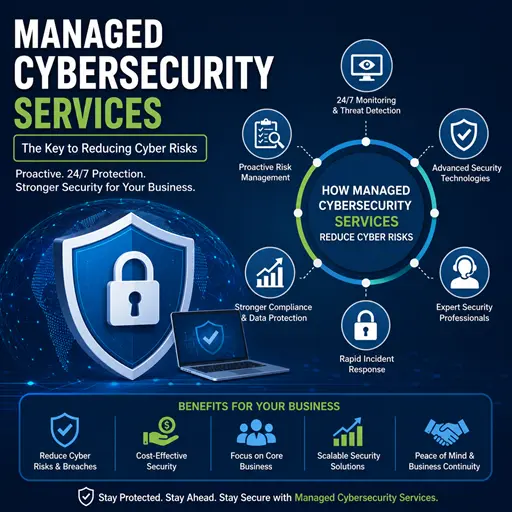
Managed Cybersecurity Services: The Key to Reducing Cyber Risks
In today’s digital landscape, businesses face an increasing number of cyber threats. From ransomware attacks to data breaches and phishing scams, organizations of all sizes are becoming targets. As technology evolves, so do the tactics used by cybercriminals, making it more difficult for businesses to keep their systems secure.
This is where managed cybersecurity services play a crucial role. Instead of relying solely on in-house teams, businesses are turning to specialized service providers to monitor, manage, and protect their digital infrastructure. Managed cybersecurity services offer a proactive and comprehensive approach to reducing cyber risks, ensuring that organizations stay protected in an ever-changing threat environment.
Understanding Managed Cybersecurity Services
Managed cybersecurity services refer to outsourced security solutions provided by expert teams that monitor and protect an organization’s systems, networks, and data. These services typically include threat detection, incident response, vulnerability management, and continuous monitoring.
Rather than reacting to threats after they occur, managed cybersecurity services focus on prevention and early detection. This proactive approach allows businesses to identify risks before they escalate into serious security incidents.
The Growing Need for Managed Cybersecurity Services
Cyber threats are no longer limited to large corporations. Small and medium-sized businesses are equally at risk, often becoming easy targets due to limited security resources.
Several factors are driving the demand for managed cybersecurity services:
Increasing Cyber Threats
The frequency and complexity of cyberattacks continue to rise. Hackers are using advanced techniques to exploit vulnerabilities in systems.
Remote Work Environments
With more employees working remotely, businesses face additional security challenges, including unsecured networks and devices.
Data-Driven Operations
Organizations rely heavily on data, making it essential to protect sensitive information from unauthorized access.
Regulatory Requirements
Compliance with data protection regulations requires businesses to implement strong security measures.
Managed cybersecurity services help organizations address these challenges effectively.
How Managed Cybersecurity Services Reduce Cyber Risks
One of the main advantages of managed cybersecurity services is their ability to minimize risks through a structured and proactive approach.
1. Continuous Monitoring and Threat Detection
Managed cybersecurity services provide round-the-clock monitoring of systems and networks. This ensures that potential threats are detected in real time.
Early detection allows businesses to respond quickly and prevent attacks from causing significant damage.
2. Proactive Risk Management
Instead of waiting for vulnerabilities to be exploited, managed cybersecurity services identify and address weaknesses in advance.
This includes:
- Regular vulnerability assessments
- Penetration testing
- Security audits
By addressing vulnerabilities early, businesses can significantly reduce their exposure to cyber risks.
3. Rapid Incident Response
When a security incident occurs, time is critical. Managed cybersecurity services offer dedicated incident response teams that can act immediately.
They help:
- Contain the threat
- Investigate the cause
- Restore systems quickly
- Prevent future incidents
This minimizes downtime and reduces the overall impact of cyberattacks.
4. Advanced Security Technologies
Managed cybersecurity services providers use cutting-edge tools and technologies to protect systems.
These may include:
- Intrusion detection systems
- Endpoint protection solutions
- Security information and event management (SIEM) tools
- Artificial intelligence-based threat detection
Access to advanced technologies ensures a higher level of protection compared to traditional security methods.
5. Expertise and Specialized Knowledge
Cybersecurity requires specialized skills that may not always be available in-house. Managed cybersecurity services provide access to experienced professionals who stay updated on the latest threats and trends.
Their expertise helps businesses implement effective security strategies and respond to complex challenges.
Key Components of Managed Cybersecurity Services
To fully understand their value, it is important to look at the core components of managed cybersecurity services.
Threat Intelligence
Service providers gather and analyze data about emerging threats. This helps businesses stay ahead of potential risks.
Network Security
Monitoring and protecting network infrastructure to prevent unauthorized access and attacks.
Endpoint Security
Securing devices such as laptops, mobile phones, and servers that connect to the network.
Cloud Security
Ensuring that cloud-based systems and data are protected from threats.
Compliance Management
Helping businesses meet regulatory requirements related to data protection and cybersecurity.
Benefits of Managed Cybersecurity Services
Adopting managed cybersecurity services offers several advantages beyond risk reduction.
Cost Efficiency
Building an in-house security team can be expensive. Managed services provide access to expertise and tools at a lower cost.
Scalability
As businesses grow, their security needs evolve. Managed cybersecurity services can scale to meet changing requirements.
Focus on Core Business
Outsourcing security allows organizations to focus on their core operations without worrying about cyber threats.
Improved Security Posture
With continuous monitoring and proactive measures, businesses can maintain a strong security framework.
Managed Cybersecurity Services vs In-House Security
Many businesses struggle to decide between in-house security and outsourcing.
While in-house teams provide control, they may lack the resources and expertise needed to handle advanced threats. Managed cybersecurity services offer a more comprehensive solution by combining technology, expertise, and continuous monitoring.
In most cases, a hybrid approach that combines both can provide the best results.
Challenges and Considerations
While managed cybersecurity services offer many benefits, businesses should also consider certain factors before choosing a provider.
Choosing the Right Provider
Not all service providers offer the same level of expertise. It is important to evaluate their experience, tools, and track record.
Data Privacy Concerns
Organizations must ensure that their data is handled securely and in compliance with regulations.
Integration with Existing Systems
The chosen solution should integrate seamlessly with current IT infrastructure.
By addressing these considerations, businesses can maximize the benefits of managed cybersecurity services.
The Future of Managed Cybersecurity Services
As cyber threats continue to evolve, the role of managed cybersecurity services will become even more important. Emerging technologies such as artificial intelligence and machine learning are expected to enhance threat detection and response capabilities.
Businesses that adopt managed cybersecurity services early will be better prepared to להתמודד future challenges and maintain a strong security posture.
Conclusion
In an era where cyber threats are constantly increasing, relying on traditional security measures is no longer enough. Managed cybersecurity services provide a proactive, scalable, and cost-effective solution for reducing cyber risks.
By offering continuous monitoring, advanced technologies, and expert support, these services help businesses protect their systems, data, and reputation. More importantly, they allow organizations to focus on growth and innovation without being held back by security concerns.
For businesses looking to strengthen their defenses and stay ahead of cyber threats, managed cybersecurity services are not just an option. They are a necessity.


0 Comments